The 8 Limbs of Yoga
By The Yoga Loft Last updated
In short
The 8 limbs of yoga are the eight steps of the yoga path set out by the sage Patanjali in the Yoga Sutras: Yamas, Niyamas, Asana, Pranayama, Pratyahara, Dharana, Dhyana and Samadhi. Put simply, they are a guide to moral living and self reflection that still applies to modern life, and they are the root of Ashtanga yoga.
Watch
The 8 limbs of yoga, in order
Each of the eight limbs and what it means, from Yamas to Samadhi.
47 seconds, no sound needed
- Limb 1 Yamas Ethics Moral rules for living peacefully with others, like kindness and honesty.
- Limb 2 Niyamas Self-discipline Personal habits for self-care, purity, and inner discipline.
- Limb 3 Asana Postures Physical yoga poses done in a specific, set order.
- Limb 4 Pranayama Breath Controlled breathing techniques to manage body energy.
- Limb 5 Pratyahara Withdrawing the senses Pulling your mind away from outside distractions.
- Limb 6 Dharana Concentration Focusing your mind on one single point.
- Limb 7 Dhyana Meditation Deep, uninterrupted meditation.
- Limb 8 Samadhi Pure awareness A peaceful state of complete unity and joy.
Yoga helps us to balance everything that life throws at us: physically, mentally and spiritually.
At the Yoga Loft, our experience and teachings are all grounded in the 8 limbs (or aspects) of yoga. By incorporating the principles of the 8 limbs into our teachings we are able to offer an authentic and rounded yoga practice.
Yoga can influence much more than just your physical body. At the heart of the ancient practice of Ashtanga are the principles of the 8 limbs of yoga. Put simply, they are a guide to moral living and self reflection which can still be applied to modern life today.
Be your best
Our behaviour and emotions are all influenced by our own self talk and others around us. It’s easy to get caught up in our busy lives and we all try to do the best we can, but sometimes it’s good to stop, take stock and check ourselves out. Are we really helping ourselves and others be the best people we can be? The principles of the 8 limbs help us to self reflect and provide us with a moral compass to engage with.
Here we outline the 8 limbs in a simple way, with suggestions of how each could show up in modern daily life. We have lots more detail and depth on this subject at the studio and we are always happy to talk to students who wish to take this on board as part of their practice.
The first two limbs, Yama and Niyama, are considered to be the foundation limbs, and once they are established the practitioner has truly begun the journey of yoga.
Limb 1: Yamas
The Yamas are a set of moral and ethical guidelines for ourselves. Choosing just one of these to focus on each week is a good start! Notice the shift in your perspective and how it makes you feel. We would love to hear your thoughts and feedback.
Ahimsā: not harming.
Be kind to yourself and be aware of the negative thoughts you have. Do something that makes your body feel healthy, like taking a walk. Be kind to others, animals and the environment. Make an effort to say something kind to your loved ones.
Satya: honesty.
Speak the truth. Be aware of how you speak, but bear in mind the first Yama and always be honest in a way that causes no harm. Don’t gossip. Be aware of the truth that you have experienced and not someone else’s version of events. Be truthful about your own internal feelings and emotions.
Asteya: not stealing.
Beyond material stealing, think about how we might steal or take from others in terms of time or energy. Be respectful, show up on time, and listen intently without expecting anything in return. Give time to others but also be present. Try not to think about the next thing you need to do, the email you need to send, or the phone call you need to make.
Brahmacharya: wise use of energy.
Treat yourself and others with dignity and respect. Notice what feelings arise when you experience sexual energy and share these with your partner. Act from a place of integrity with your energy, sexual or otherwise.
Aparigrahā: non-possessiveness.
Shift your focus beyond material possessions and towards generosity. Look at the more subtle ways our thoughts and actions are possessive. Addiction, material cravings or time can all be destructive. Do something generous for someone instead.
Limb 2: Niyamas
Saucha: purity, cleanliness.
Keep your body clean on the inside and outside to promote balanced emotional energy. Eat clean and healthy food. Practise some feng shui at home and clear out some clutter, or start with a tidy, clutter free desk!
Santosha: contentment, gratitude.
This comes from a place of abundance. Make a mental list of all the things you are grateful for right now. Be happy with and thankful for the way your life is. Meditate and think about all that you have.
Tapas: discipline.
Be diligent and committed to yoga and self work. Cultivate the “fire in your belly” that keeps you motivated. Pick one aspect of your life you’d like to change and practise it for 30 days.
Svadhyaya: self-reflection.
An ongoing process of understanding who we are by inner reflection. Look at yourself through your own eyes and through the eyes of others. Tune into your inner navigator to determine where you are now, where you want to be, and your priorities.
Ishvara Pranidhana: devotion.
Yoga is a spiritual practice, not a religion. It does not impose certain beliefs but does emphasise “the divine in each of us”. OM is the name of the divine, the sound of the universe that connects us all together. Make an effort each day to appreciate all the creatures and objects you come across in your life.
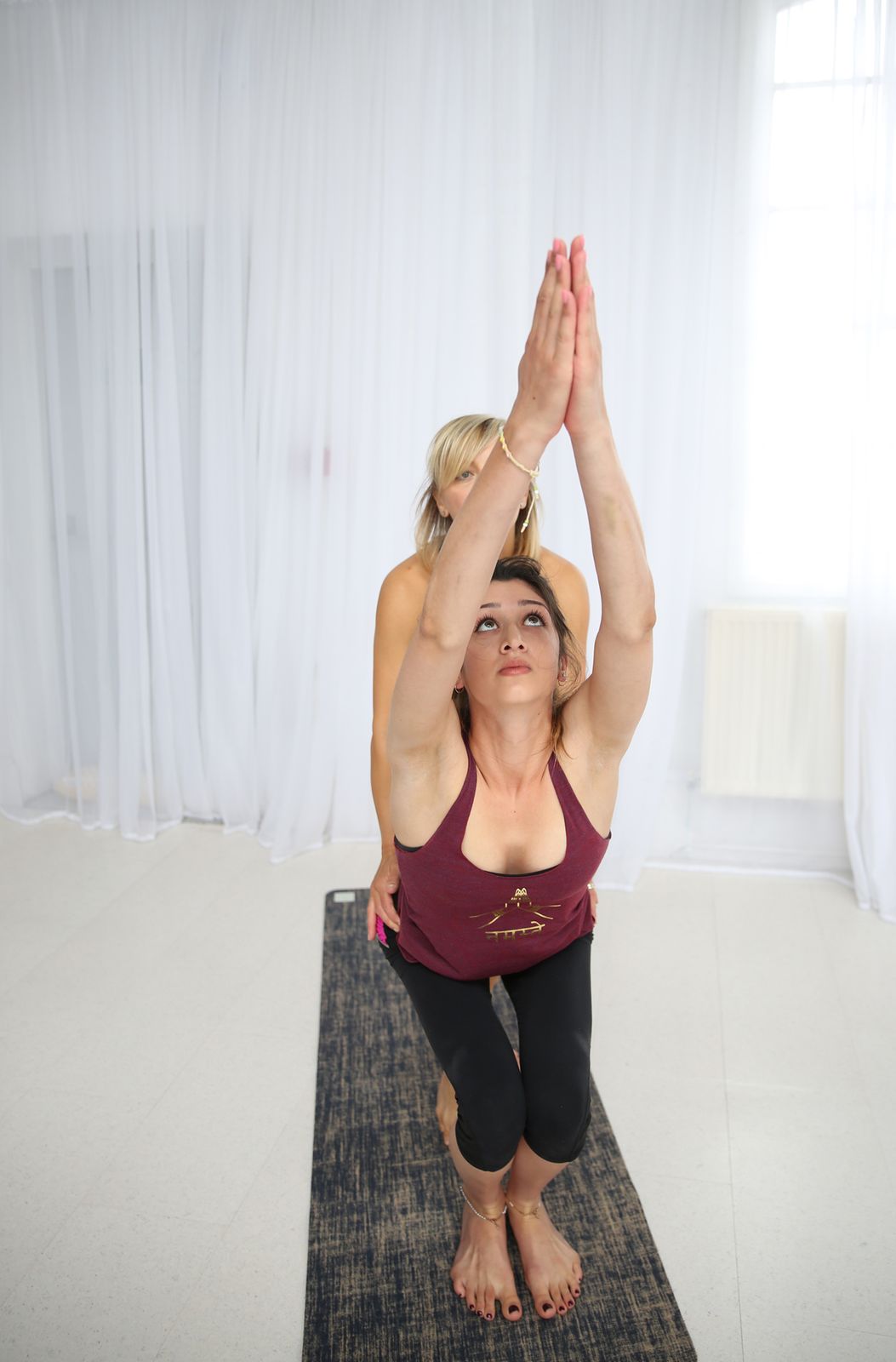
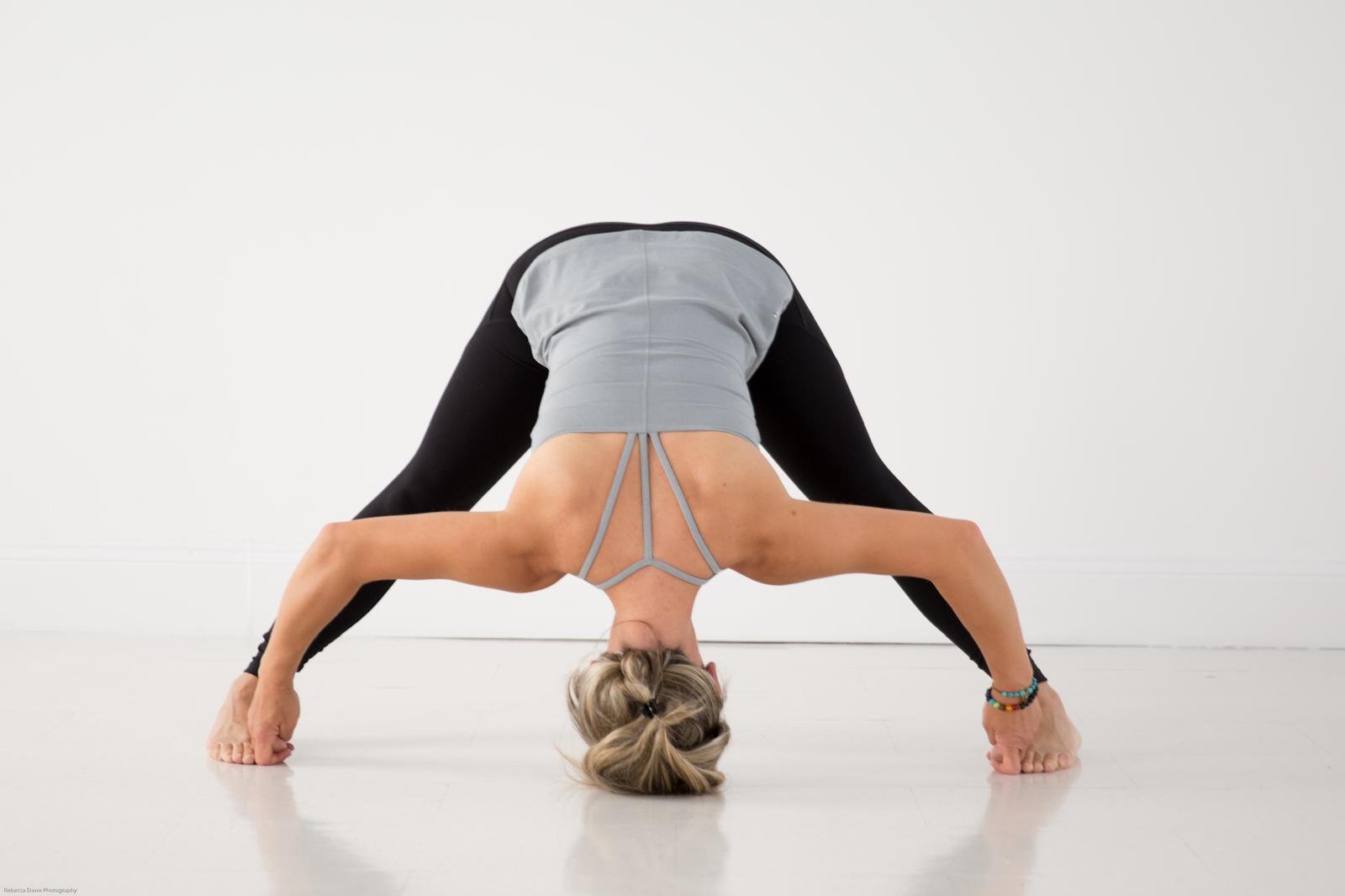
Limb 3: Asana, the physical practice
The physical yoga practice helps to maintain physical health and vitality, and through this practice we also learn a few lessons about ourselves!
Link breath to movement while practising to feel a state of moving meditation. Focus on what you feel in each pose. Does it require more patience, or more mental stamina to maintain and challenge yourself?
When you are presented with a challenge, what is your response? Can you listen to your gut rather than do what you think you should be doing? Do you ease off or push harder? This all helps us to cope with the challenges in each of our lives and teaches us to trust our feelings.
Limb 4: Prānāyāma, breath
The fourth limb is prānāyāma: the focus on the breath. Through various techniques, prānāyāma enables us to relax and control our breath for health in the body and peace in the mind. In our classes we teach Ujjayi breath, a relaxing and invigorating technique that co-ordinates breath with movement.
Try practising your breath work outside of class, and use it when you feel stressed to help calm the mind and body.
Limb 5: Pratyāhāra, withdrawing of the senses
Letting go and abandoning the distractions of daily life, freeing the mind to move into meditation.
Try reducing the sensory overload we experience from our modern lives of TV, social media, and stressed out friends and colleagues, and allow yourself the freedom not to take it all in. See if you feel calmer as a result! Give yourself 20 minutes to meditate each day.
Limb 6: Dhāranā, concentration
Strict concentration on one object or task, to reach a state where there are no distractions. For example, when staring into your lover’s eyes, the rest of the world is forgotten.
Try to still your mind. Focus on one thing until all else disappears.
Limb 7: Dhyāna, meditation
The seventh limb is dhyāna: meditation, a state in which you experience the sacred through a deeply focused awareness.
If you are a beginner to meditation, there are several ways to learn: personal instruction from a teacher, videos, or books. Start with a goal of 5 to 10 minutes a day, every day, preferably in the morning when your mind is clear. Over time, increase your meditation sessions to 30 minutes a day.
Limb 8: Samādhi
The bringing together of all aspects of the yoga practice. A true feeling that everything is interconnected, and we can enjoy pure awareness and harmony.
Although this is the ultimate goal, the process is ongoing and requires constant practice, as we as individuals, and the practice itself, continuously evolve.
Kat’s teacher John Scott explains the 8 limbs in an easy to understand way in this video.